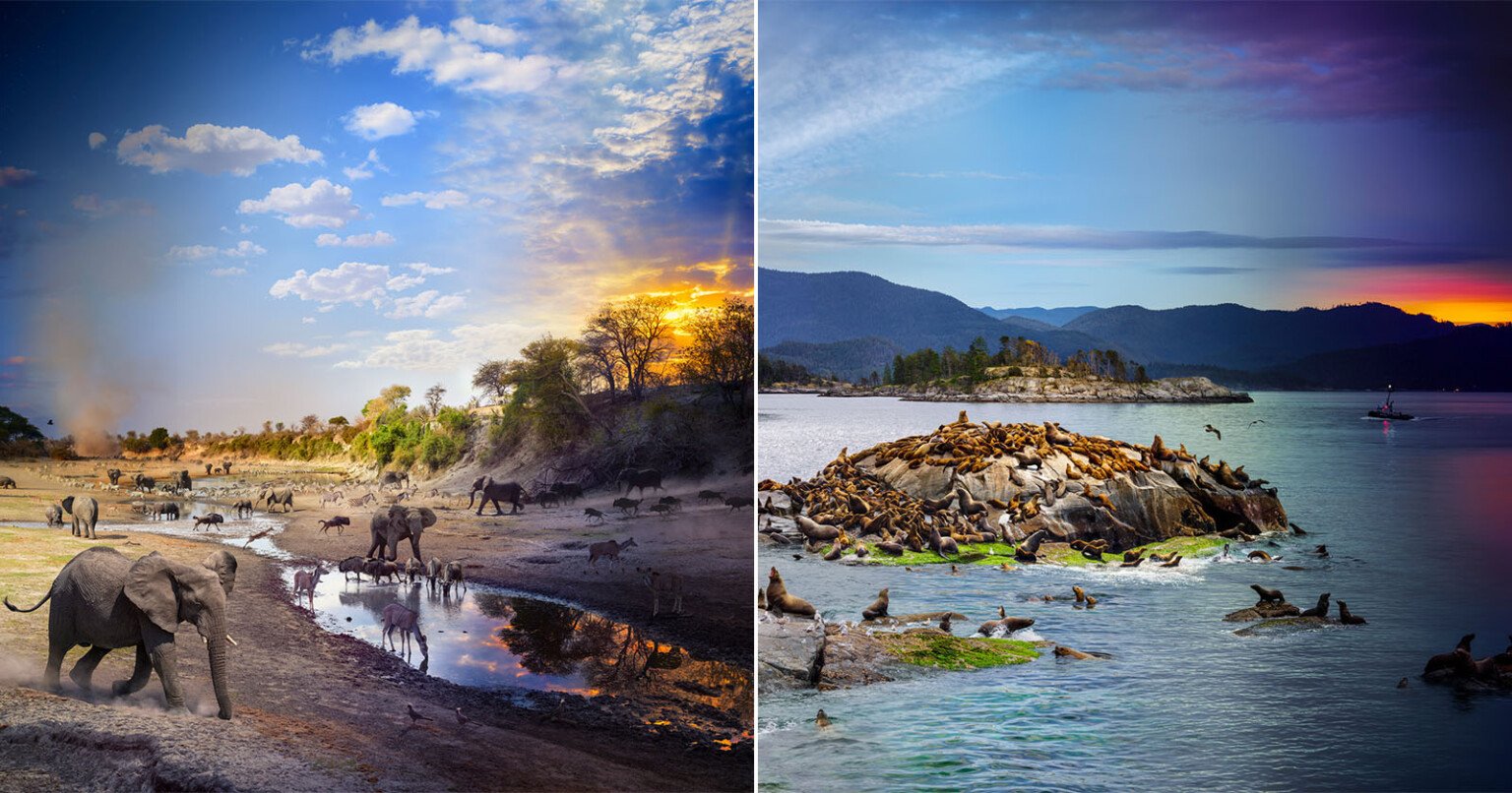
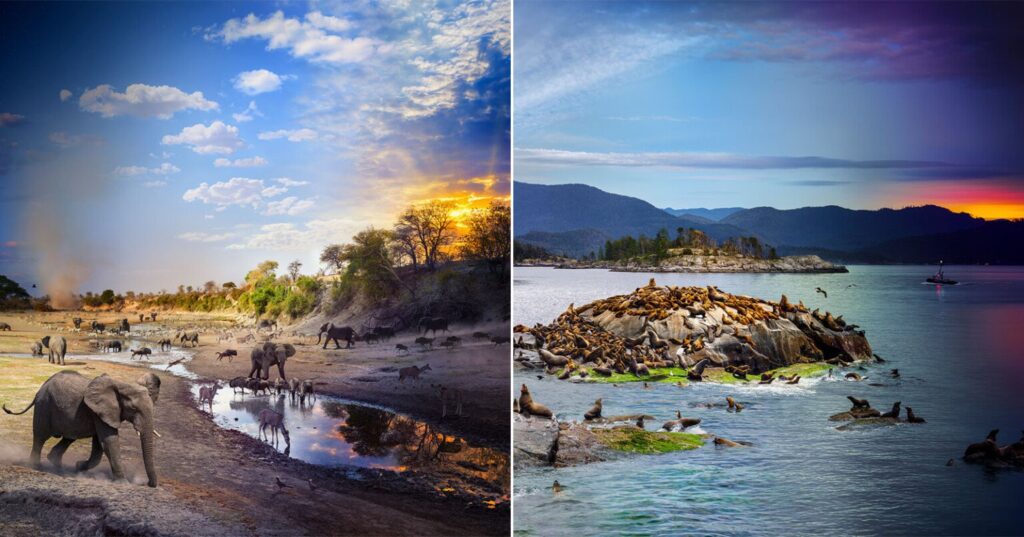
Award-winning photographer Stephen Wilkes has two photos in this year’s National Geographic Pictures of the Year, a celebration of 25 of the best and most important photos featured in this year’s issues of National Geographic. The photos, Wilkes’ famous Day to Night images, add a new layer — time — to beautiful wildlife scenes.

Wilkes’ two featured photos each show wildlife, albeit in very different ways and in vastly different climates. One features a Steller sea lion rookery in the Malaspina Strait in British Columbia, Canada, while the other shows a drought-ravaged water hole in Botswana’s Okavango Delta. The Steller sea lions, thanks in large part to significantly stronger protections from the Canadian government, are a recovering population. The antelope, hippos, elephants, and more in Botswana were struggling after a five-month drought, competing for every last drop of water, when they would have otherwise peacefully coexisted.
While Wilkes has long kept the secrets of his post-processing close to his vest, as part of Pictures of the Year 2025, the photographer has provided a never-before-seen look at how he and his talented team take his photos, captured over many hours, sometimes days, and create the final temporal composite.
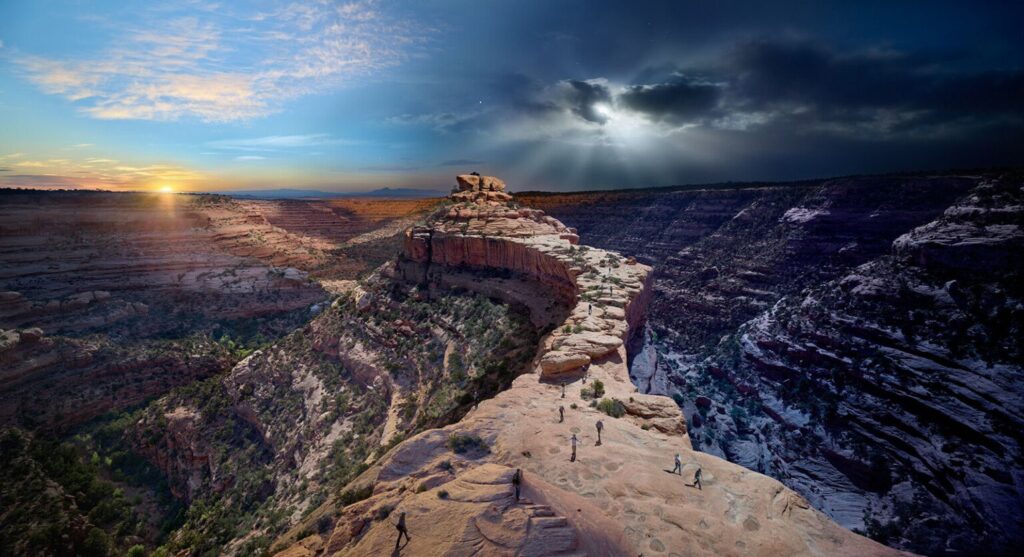
“It’s always driven by narrative,” Wilkes says of the final decisions made about which precise moments to keep and which to leave out in the final photos. He says there are times when he is in the field, captures a shot, and just knows, “that has to be in the picture.”
And Wilkes is in the field a lot to create these photos. For the Steller sea lion shot, he was in a blind on a rock out on the water for nearly 50 hours, getting about “one hour” of sleep during the entire time. In Botswana, he was in a blind at the top of a jack mounted to a pickup truck, nearly 20 feet off the ground, for 18 hours, mostly in 105° F heat.

Not only does Wilkes need to be out there so long, constantly watching and shooting, to get the best final image, but he also argues that it’s essential to fully experience the ebb and flow of time in a space, to really get to know the animals and the place they call home.
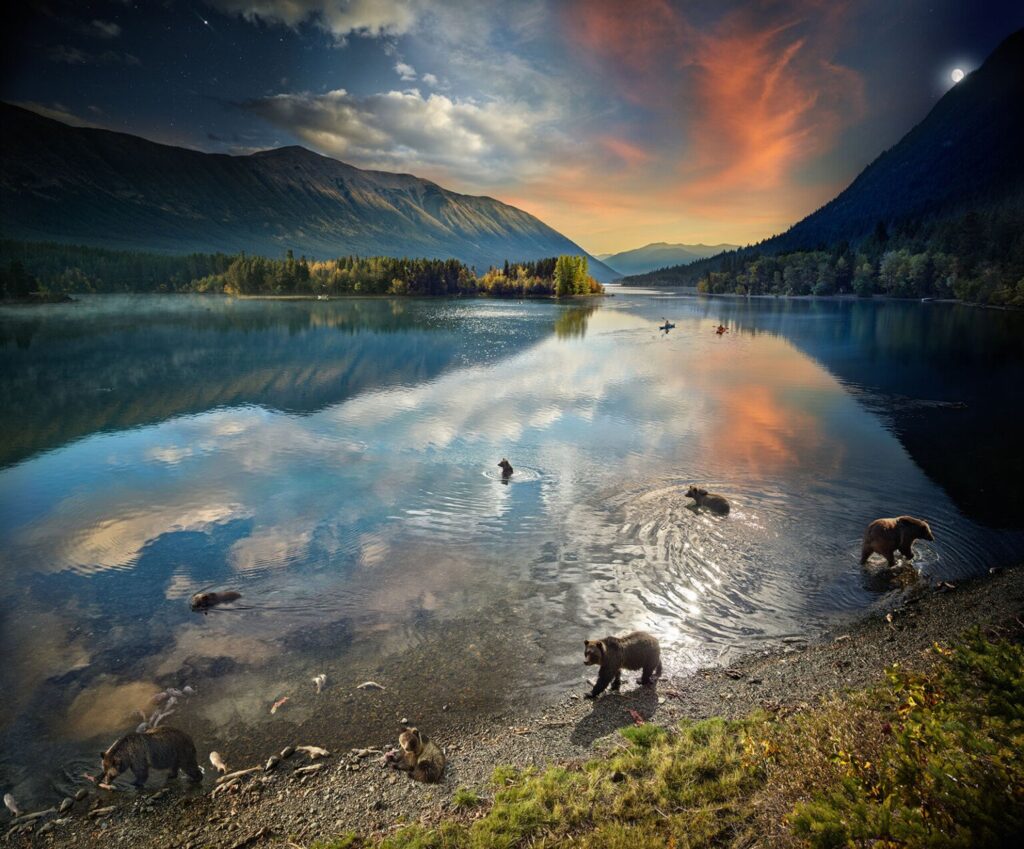
A Stellar Photo of Steller Sea Lions
“It’s an amazing thing to witness over the course of time,” Wilkes tells PetaPixel of the Steller sea lions. “The males are the dominant species, and when they’re breeding, the whole idea is whoever is at the highest point physically on that rock becomes the dominant male. It’s like a game of king of the hill.”
Over the two days Wilkes was there, he witnessed males fight their way to the top, run out of energy, and then get bested again and again. After toppling the competition, the male stands as high as they can. These statuesque victors are seen throughout Wilkes’ photo. Each major rock area has its own king, albeit a temporary one.
Meanwhile, as the males are fighting over rocks, the females are often out hunting and gathering food for the young, who chase each other on the rocks and in the water.
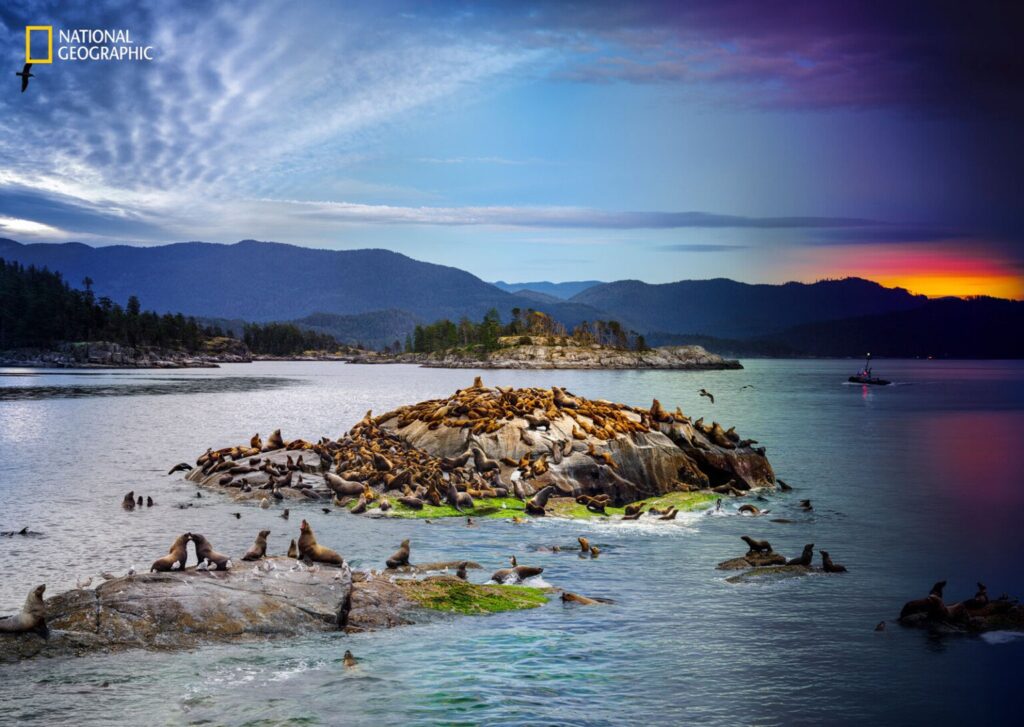
All the while, as these different, interconnected relationships play out on what is ultimately a fairly small rock outcropping in the water, the tide is rising by a couple of feet per hour, which Wilkes describes as “dramatic.” It was also a challenge he had to overcome when shooting and creating the final shot: the action and sea lions were captured at all hours and at different tides, yet the final frame has a unified sea level, which is ultimately near its low tide position.
This challenge was “one of the things that was really exciting for me,” the photographer explains. “How do I manage capturing this, not only the transition of time and light and behavior, but also how do I show the dramatic changes this island takes over the course of 24 hours?”
Wilkes points out the green mossy area on the rock, which, when visible at low tide, “changed” the behavior of the sea lions.
“It was so rich and green and alive. It was spectacular. It was almost like a play land for the children,” Wilkes says, citing this experience as one of the standouts of his time in the field.
In the final shot, a group of pups chases each other through the scene, like a game of “follow the leader.”
“This is one of my favorite moments,” Wilkes says. “There’s this joyful celebratory aspect to these animals. When you study them for the course of 48 hours like I did, you begin to really see the individual personalities of these Steller sea lions.”
To ensure the sea lions felt safe and comfortable, Wilkes and his team carefully set up their blind so that a rock wall was behind it, facing the prevailing wind. This meant that the wind didn’t hit the blind and carry Wilkes’ scent toward the rookery rock. Sea lions rely heavily on their olfactory senses, so it made a huge difference that they couldn’t smell the photographer. He believes he is the first person to be allowed on these islands, at least since the Canadian government began protecting the Steller sea lion habitat, so it was essential to make as small an impact on the environment and animals as possible.